The 20-Minute Money Leak Audit
Most money leaks are not dramatic enough to feel urgent. That is why they survive. This audit gives you one short place to check the charges, defaults and habits most likely to keep costing money in the background.
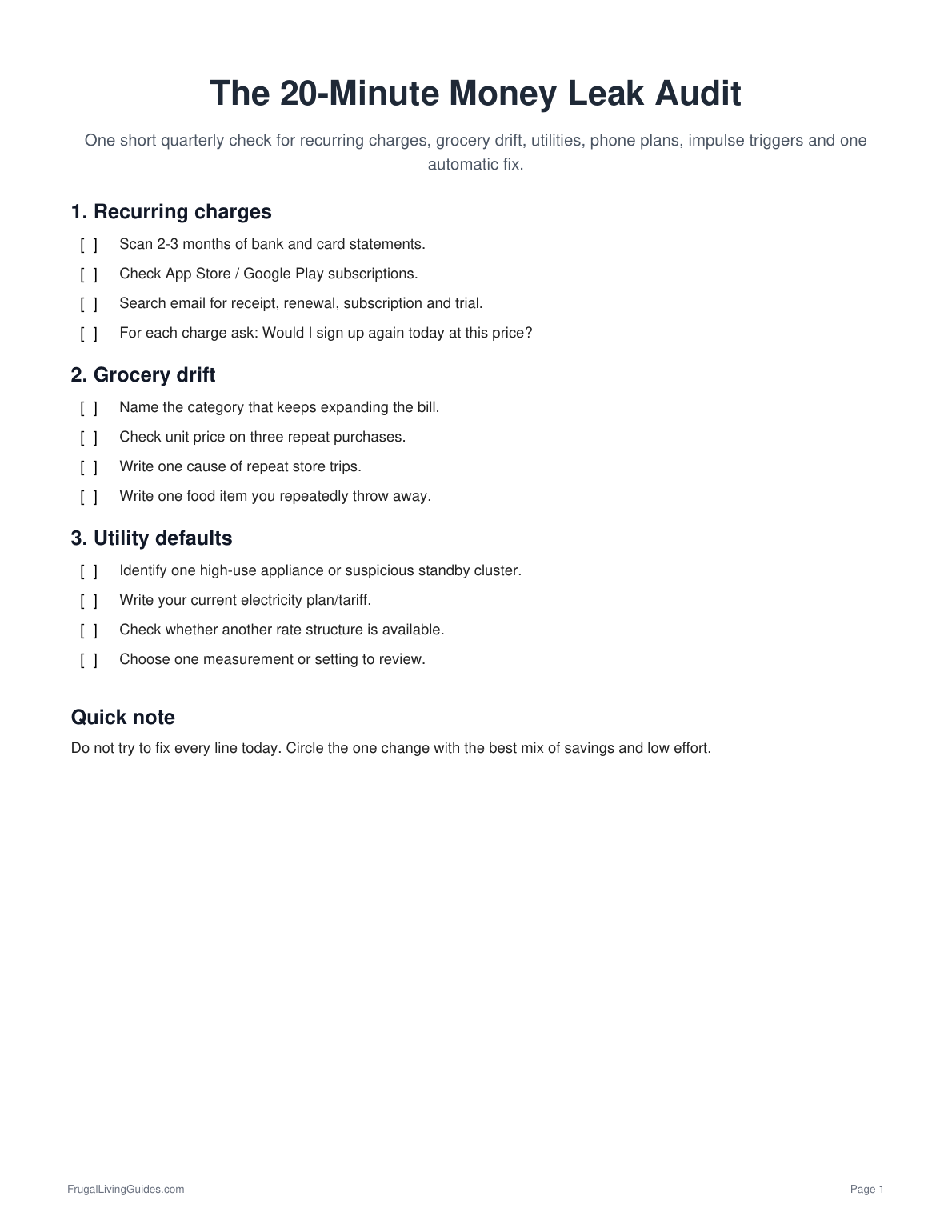
You can use the page below on screen, or download the printable PDF and write on it.
Download → 20-Minute Money Leak Audit PDF
When to use it
Run the audit:
- when you have not reviewed recurring expenses in the last three months;
- after a move, job change or major income change;
- when your monthly spending feels higher but you cannot name why;
- before trying a restrictive budget;
- once per quarter as a 20-minute maintenance habit.
The goal is not to find 37 things to cut.
The goal is to find the one or two changes that keep saving money after the audit is over.
How the sheet works
The printable has six zones.
1. Recurring charges
Check bank and card statements, then app-store subscriptions and email receipts.
For each recurring charge ask:
Would I sign up again today at this price?
Keep the yeses. Cancel the noes. Investigate anything you do not recognize.
2. Grocery drift
Write down one category that repeatedly expands the bill.
Maybe it is extra store trips. Maybe it is food waste. Maybe it is a convenience purchase you make after long workdays.
Choose one fix for the next week. Do not redesign your entire diet.
3. Utility defaults
Look for major loads first, then worthwhile standby clusters.
Write down the current electricity plan or tariff and whether another structure is available. If you are considering time-of-use pricing, compare when your household actually uses electricity.
4. Phone plan
Check three months of cellular data use.
Then list the plan allowance, paid add-ons and any device financing. You are looking for a mismatch between the service you use and the service you still pay for.
5. Spending triggers
Think about the last three non-essential purchases you regretted.
What happened just before each one?
Stress? Boredom? A sale countdown? Social media? Payday?
The repeated trigger is more useful than promising to “try harder.”
6. One automatic move
Choose one change that can run without attention:
- savings transfer;
- subscription-review reminder;
- grocery list day;
- phone-plan recheck;
- power-strip shutdown routine;
- sinking-fund transfer.
One persistent change is better than a page full of intentions.
What to do with the result
At the bottom of the sheet, write only three actions:
Cancel / Change / Automate
If you found ten possible improvements, rank them by expected value and effort.
Do the easiest high-value one first.
When the checklist is not enough
A general audit cannot decide whether a specific debt, insurance policy, investment or legal/contract issue should be changed.
If the decision could create a major financial loss, tax consequence, loss of essential insurance or another high-impact outcome, use the audit to identify the question — then get the plan documents or individualized professional advice you need.
Related guides
- The Subscriptions You Forgot You’re Paying For
- You May Be Paying for Data You Never Use
- Your Electronics Are Still Using Power While “Off”
- Why the Urge to Buy Peaks Before You Own the Thing
- Why You Can’t Save Money — And the System That Fixes It