The 12-Month Money-Saving Maintenance Calendar
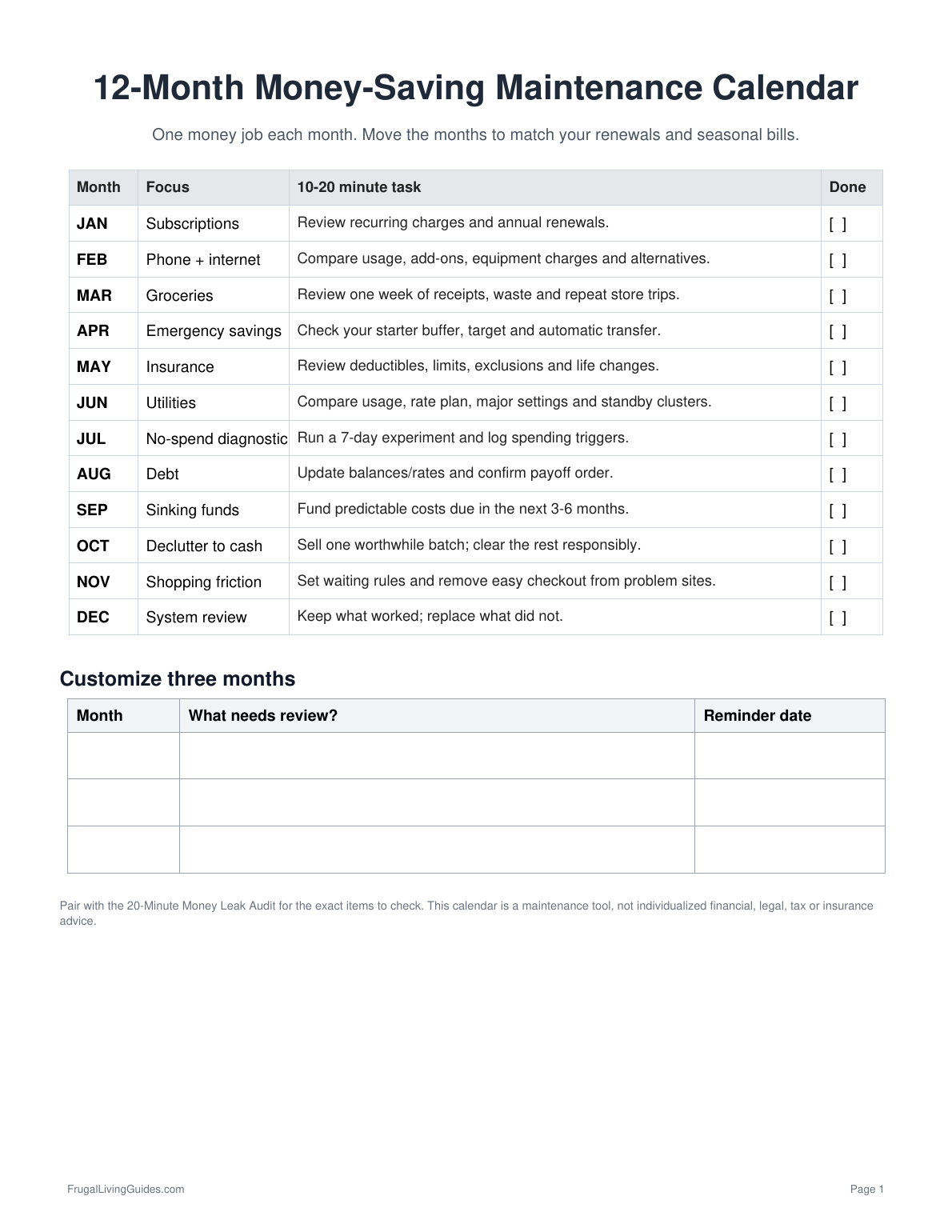
The expensive part of a money fix is often forgetting to check it again. This calendar gives each month one short job so subscriptions, plans, bills and buffers do not quietly drift for another year.
Download → 12-Month Money-Saving Maintenance Calendar PDF
Why a calendar works better than “remember to review”
Most recurring expenses do not need daily attention.
They need attention before renewal, after a life change, or often enough that drift becomes visible.
Putting everything on one monthly to-do list creates the opposite problem: too much maintenance, every month.
This calendar spreads the work.
The 12-month schedule
January — subscriptions
Review streaming, apps, memberships, cloud storage and annual services.
Keep what you would actively buy again.
February — phone and internet
Check current usage, plan allowances, add-ons, equipment charges and available alternatives.
March — groceries
Review one week of receipts. Look for repeat store trips, waste and products where unit price matters.
April — emergency savings
Check the starter buffer, the larger resilience target and whether the automatic transfer still fits current cash flow.
May — insurance
Review deductibles, limits, exclusions, household changes and renewal dates.
June — utilities
Compare usage with the same season last year if possible. Check rate plans, major appliance settings and worthwhile standby loads.
July — no-spend diagnostic week
Run one short spending-pause experiment and log the triggers that appear.
August — debt
Update balances and interest rates. Confirm the payoff order still makes sense.
September — annual and holiday sinking funds
Look ahead three to six months. Start funding predictable costs before they become “surprises.”
October — declutter to cash
Pick one category of unused items. Sell only what is worth the effort and give the proceeds a destination.
November — shopping friction
Before high-promotion season, remove saved cards from problem sites, create a waiting rule and write a gift/spending list.
December — system review
Which change saved money without requiring attention? Keep it. Which rule never worked? Replace it.
How to customize the schedule
Move the insurance month to 30–45 days before your major renewal.
Move the utility review to the season when your bills peak.
If taxes, school costs, travel, car registration or professional dues are major annual expenses, replace a low-value month with a sinking-fund review for that expense.
The calendar is a framework, not a commandment.
Add three event-based reviews
The monthly schedule catches slow drift. Some changes should trigger a review immediately instead of waiting for their assigned month.
Add a money check after:
- a move or major rent/mortgage change;
- a new job, loss of income, or meaningful raise;
- adding or losing a household member;
- buying a vehicle or home;
- a major insurance claim;
- paying off a debt;
- finishing device financing or another fixed-term payment.
These events change the assumptions behind multiple parts of the system at once. A new job may change commuting costs, phone needs, benefits and savings capacity. A move can change utilities, insurance and groceries.
Use the calendar for maintenance. Use life changes for recalibration.
The five-minute version
A busy month does not have to become a skipped year.
If you cannot do the full task, answer three questions:
- What changed since the last review?
- What am I paying for automatically?
- What needs a reminder before the next renewal?
Write one action and stop.
Pair it with the audit
The maintenance calendar tells you when to look.
The 20-Minute Money Leak Audit tells you what to check.
Together they turn a one-time cleanup into a repeatable habit without making personal finance a weekly hobby.
Related guides
- Make Saving Happen Before You Can Spend It
- How Much Emergency Fund Do You Actually Need?
- Insurance Audit: What to Keep, Cut, and Check
- Before You Donate It, Check What It Could Sell For
- Why You Can’t Save Money — And the System That Fixes It