The Grocery Store Is Making Decisions With You
A grocery store is not a neutral list with shelves around it. Placement, promotions and package sizes all shape what ends up in the cart. Walk in with your own rules and the store gets fewer chances to make the decisions for you.
In the last article we hunted the charges that leave while you’re not looking. Groceries are the opposite: the one big expense you look at every single week — and still lose. Most budgets treat food as the place to “just be more disciplined.” That advice ignores how much the shopping environment influences what you notice and buy.
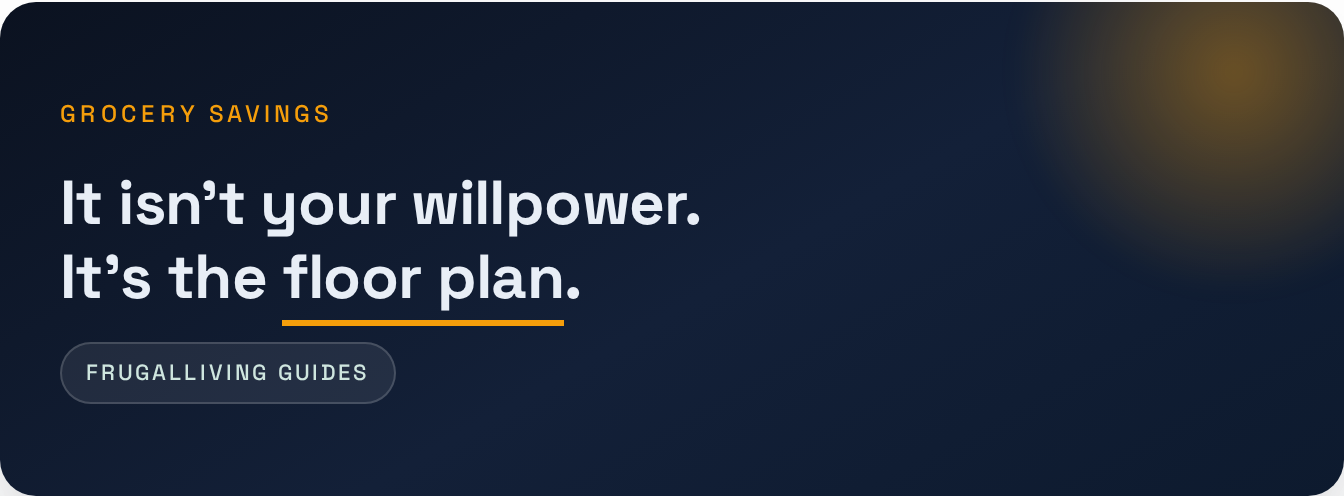
Supermarkets use layout, shelf position, promotions and checkout placement to influence attention and sales. None of that removes your choice, but it does mean your shopping environment is doing some of the persuading.
The store has a path. Bring your own plan.
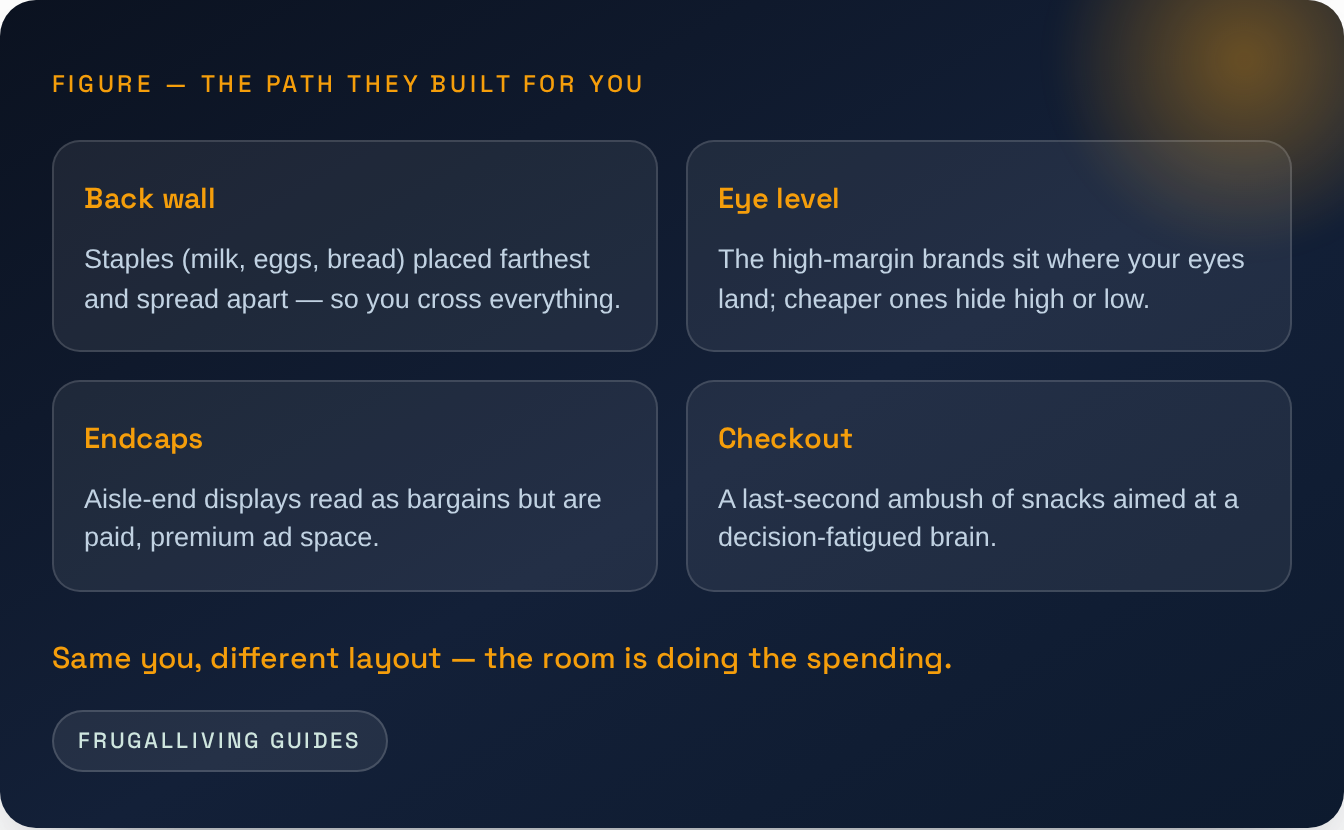
Notice what’s where. Staples are often positioned so a normal trip takes you through more of the store. Exact layouts vary, but the principle is simple: the longer you browse, the more unplanned products you have a chance to notice.
Eye-level shelves and endcaps are valuable retail real estate because visibility affects attention and sales. A prominent display is not proof of the lowest price, so treat placement and value as separate questions. And the checkout lane puts small, easy-to-add items in front of you at the moment you are already finishing a long series of choices.
The number that matters: price per unit
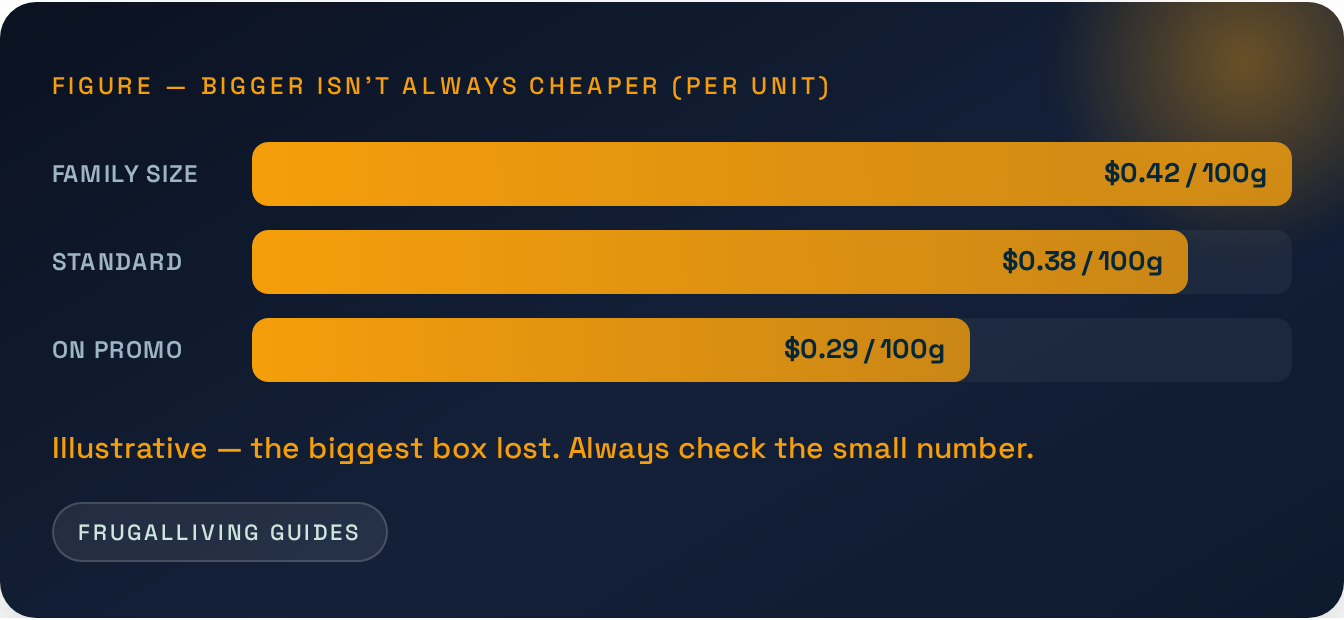
The single most expensive habit at the shelf is comparing the big number on the sticker instead of the small one underneath it — the unit price (price per 100g, per litre, per item). Package size can make comparisons surprisingly hard, and a larger package is not automatically cheaper per unit. “Bulk = savings” is true often enough to feel like a rule, and false often enough to cost you every week.
Train one reflex: read the unit price, not the shelf price. It’s usually printed in small type on the shelf tag. Checking unit price turns a visual guess into a direct comparison.
Build the shop so willpower never has to show up
The easiest grocery savings usually begin before you enter, because fewer open decisions inside the store means fewer opportunities for the trip to drift:
- Bring a list and buy the list. Undecided shopping is where the layout wins. A list turns the trip into fetching, not browsing.
- Never shop hungry. Shopping while hungry has been linked in experiments to choosing or acquiring more food, so eating first can remove one avoidable pressure. Eat first, then go.
- Use your list to choose the route. “Shop the perimeter” can be a useful shortcut in some stores, but healthy and economical staples also live in center aisles — beans, rice, oats, canned vegetables and more. The list matters more than the geometry.
- Plan meals around what’s cheap and in season, not the other way around. The menu bends to the price, not your cravings to the menu.
- Cut one trip a week. Fewer visits = fewer ambush points. Extra trips create extra opportunities for unplanned purchases.
None of these ask you to resist a craving in the moment. They remove the moment. You are not trying to outsmart every display. You are reducing the number of decisions the store gets to make with you.
The cheapest unit price can still waste money
Unit price is one of the best anti-marketing tools in a grocery store, but it is not a command to buy the biggest package.
The better value only exists if you use the product before it spoils, goes stale, or becomes the thing everyone in the house suddenly refuses to eat.
Before sizing up, ask:
- Do we finish the smaller size reliably?
- Can this be frozen or stored safely?
- Is the larger package still cheaper after any membership or delivery cost?
- Will buying more increase how much we consume?
A 20% cheaper unit price on food you throw away is not a saving.
Put a stock-up rule on repeat purchases
Sales can save money when the item is genuinely repeatable.
Pick a handful of products you know you will use — detergent, coffee, rice, frozen vegetables, pet food, whatever fits your household — and learn the normal unit price. When a meaningful discount appears, buy enough to bridge to the next likely sale within your storage and cash limits.
This works better than chasing every red tag because it turns “deal hunting” into a small list of known prices.
One extra trip is rarely just one item
The emergency grocery run has a hidden cost: it opens the door to another set of decisions.
If you repeatedly go back for milk and leave with six things, the fix may be boring but effective: put the two or three items that cause repeat trips on a visible “running out” list and check it before the weekly shop.
You are not trying to become a perfect meal planner. You are reducing unnecessary store entries.
Track waste for one week, not forever
For seven days, write down food that gets thrown away and why:
forgotten / cooked too much / spoiled before use / bought for one recipe / household didn’t like it
The pattern tells you where the next saving is.
If produce is dying in the drawer, the answer is not necessarily cheaper produce. It may be buying less, freezing sooner, or planning the first two meals around the most perishable food.
That is the kind of saving that lowers the bill without making dinner worse.
The bill that arrives whether you shop or not
You just beat the one big expense you can see. Next comes a sneakier one: the bill that shows up every month whether you buy anything or not — and a real chunk of which powers nothing at all. Same principle, invisible battlefield.
What to do before the next shop
Make the trip easier to control before you arrive: bring a list, compare unit prices, avoid shopping hungry when you can, and reduce unnecessary extra trips. You do not need to “beat” the store. You need a process that makes fewer unplanned decisions inside it.
Next in this series → Your Electronics Are Still Using Power While “Off” — find the standby loads worth caring about before chasing pennies.
Part of the larger guide: Why You Can’t Save Money — And the System That Fixes It.
Continue the money-saving cycle
- Previous: The Subscriptions You Forgot You’re Paying For
- Next: Your Electronics Are Still Using Power While “Off”
Sources & further reading
- Environmental psychology of retail: store layout, product placement, and eye-level shelving effects on purchasing.
- Research on shopping while hungry and increased spending / caloric buying.
- Unit-price comparison and consumer confusion over package-size pricing.
- Point-of-purchase and checkout-zone impulse research.