Before You Donate It, Check What It Could Sell For
Decluttering can save space. Done carefully, it can also recover some of the money already tied up in things you no longer use. Before you donate or discard an item, ask one question: is the resale value worth the effort?
After cutting recurring costs and building buffers, look around the house. Some unused items still have resale value. Others are worth more as reclaimed space than as a week of messages, listings and no-shows. The frugal move is not “sell everything.” It is matching the effort to the likely return.
Sell, donate, recycle — but choose deliberately
Throwing away a sellable item can leave value on the table. Keeping a low-value item for months because you might sell it can also cost you time and space. Use a simple rule: sell when the likely return justifies the work; donate, recycle or dispose responsibly when it does not.

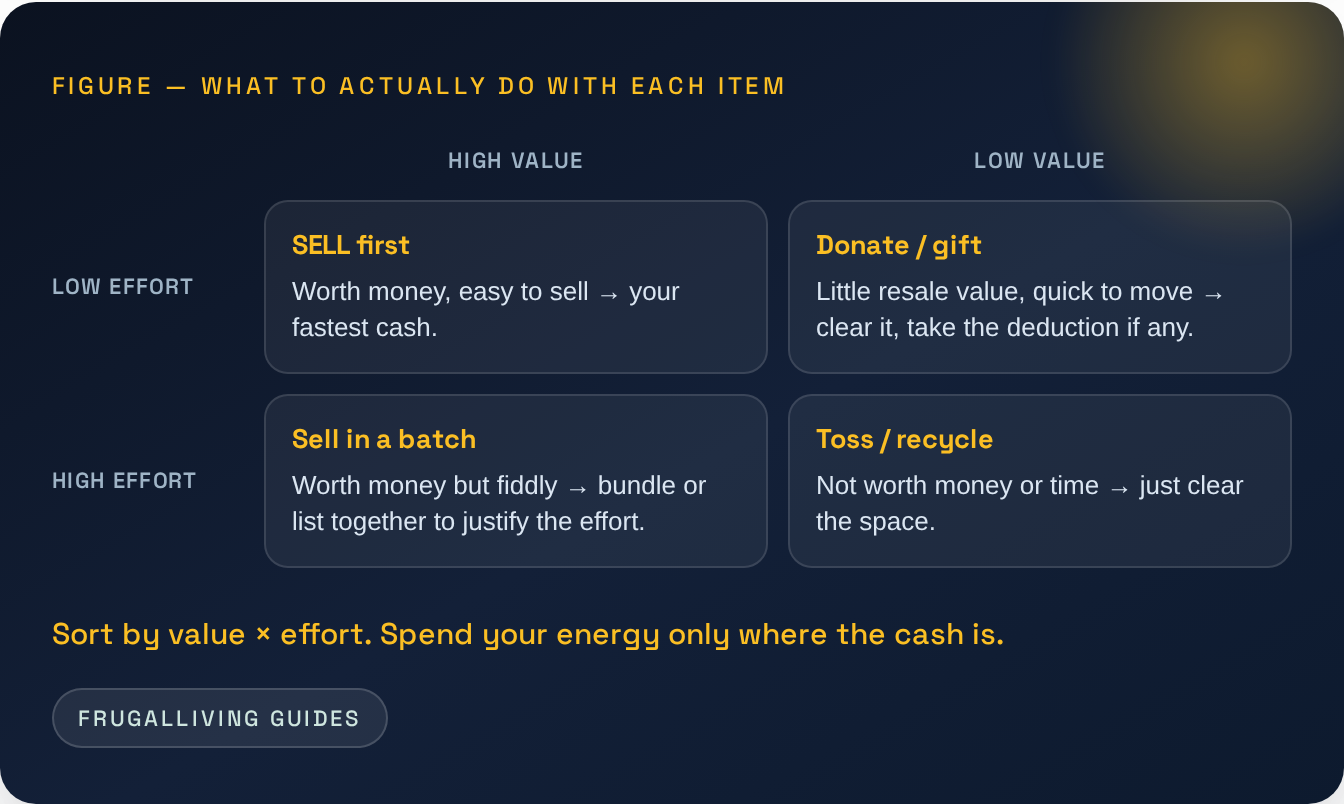
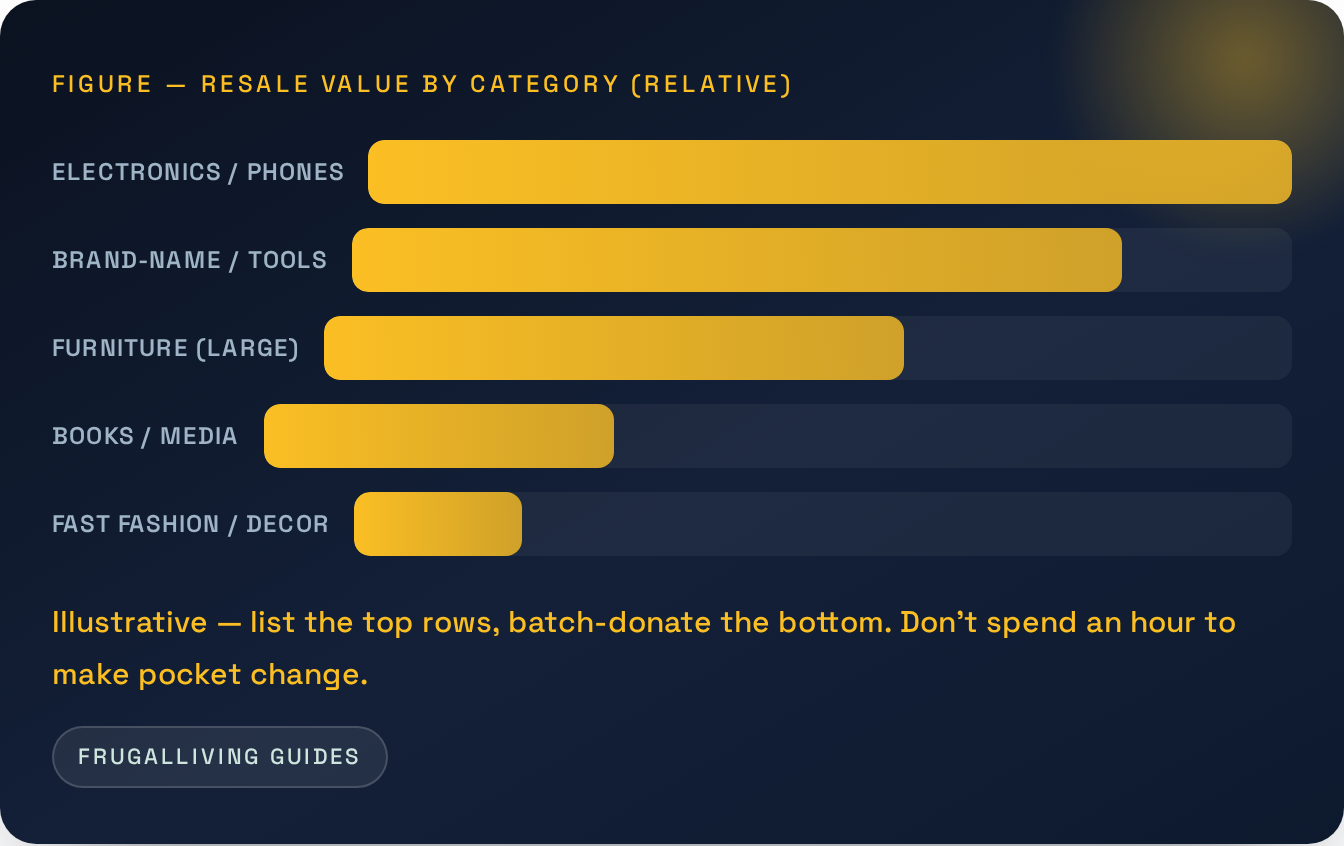
Where the resale value actually hides
Effort follows value, so know which piles are worth listing and which to just clear out. Some categories hold their price remarkably well; others are worth more as space than as sale:
The bigger win is avoiding the refill
Selling clutter is a one-time payout. The real prize is not refilling the space — and that’s the same skill from the very first article in this series. The stuff piled up because of the triggers you mapped in your no-spend challenge: boredom, sale-FOMO, the anticipation loop. Decluttering without fixing the inflow just resets the timer. So close the loop:
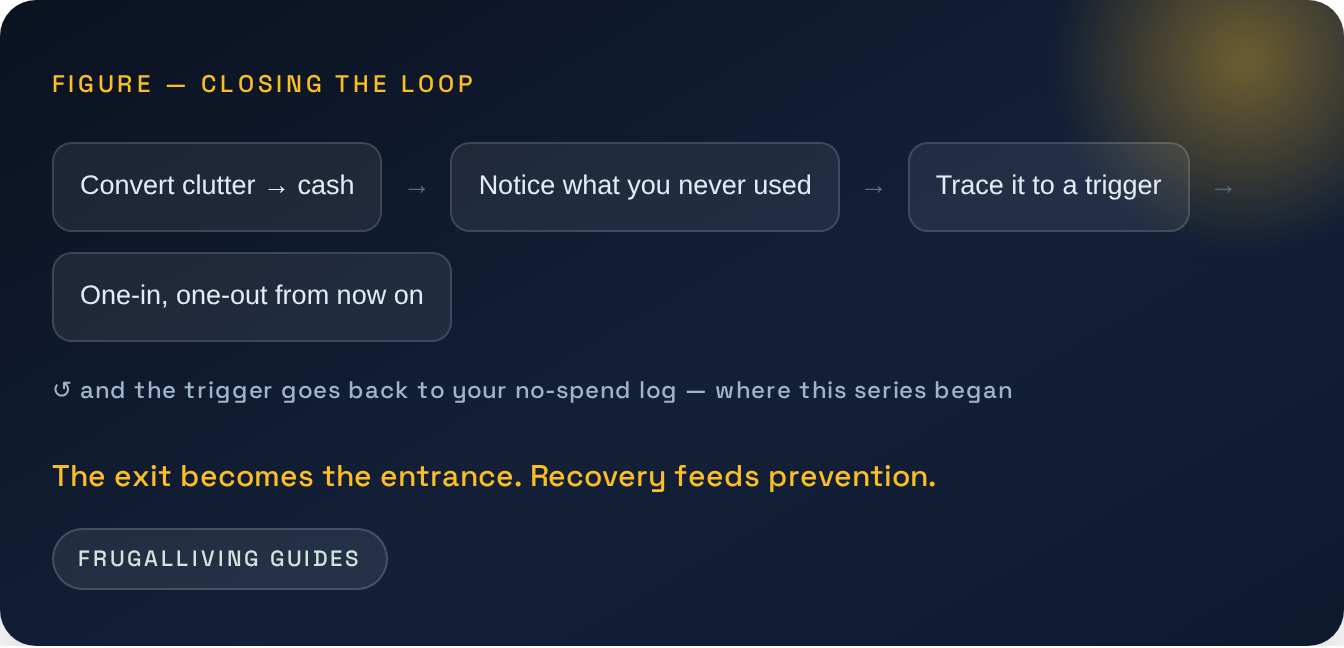
- One-in, one-out. Nothing new comes in without something going out. The pile can’t grow by design.
- Read the graveyard. The things that sold for pennies or wouldn’t sell at all are a map of your worst purchases — feed that straight into the friction ladder from the impulse article.
- Bank the proceeds into the system. Don’t let recovered cash become spending money — route it to savings or debt automatically, the same pipes you already built.
Use the 15-minute resale test
Not everything with a price tag deserves a listing.
Before you photograph an item, answer four questions:
- What do similar used items actually sell for — not what sellers are asking?
- How easy is it to photograph and describe accurately?
- Will it need shipping, pickup coordination, or repeated messages?
- After fees, packing and time, is the expected return still worth it?
A $15 item that takes an hour of back-and-forth may be a bad sale. A $150 appliance that needs six good photos and one pickup appointment is a different equation.
This keeps “decluttering for cash” from turning into a second unpaid job.
Batch the work so the house does not become a warehouse
Selling one item at a time creates a strange middle state: the clutter is no longer useful, but it is still everywhere.
Use a short batch window.
Day 1: sort and choose only the items worth selling.
Day 2: photograph everything in the same light.
Day 3: list the batch.
Deadline: if a low-value item does not sell by a date you choose, lower the price, donate it, recycle it, or dispose of it responsibly.
The deadline matters. Otherwise “I’m going to sell this” becomes a permanent storage category.
Price from completed sales when you can
Asking prices are wishes. Completed sales are evidence.
For common electronics, furniture, collectibles and branded goods, search sold/completed listings on the marketplace you plan to use. Condition, local demand, shipping cost and season can move the number, but a real transaction range is more useful than the highest listing you can find.
Also protect yourself from fake urgency. A buyer who wants you to move communication off-platform, overpays and asks for money back, or sends a suspicious payment link is not a better buyer because they answered quickly.
Give the recovered cash a destination
This is the part most decluttering articles miss.
If $240 comes back from selling unused items and it lands in ordinary checking with no plan, it can disappear into ordinary spending within weeks.
Decide the destination before the sale:
- emergency fund;
- debt target;
- replacement fund for something you actually use;
- a specific savings goal.
The sale closes one loop only when the recovered value is assigned on purpose.
Protect your time with a minimum-sale rule
Set a personal floor for what deserves an individual listing. Maybe it is $20, $40, or $75 depending on your available time and the platform you use.
Below that floor, bundle similar items, use a local bulk listing, donate them, or move them out.
The number itself is not the point. The rule is.
Without one, a frugal project can quietly turn into evenings spent photographing $6 items, answering messages, and storing boxes for weeks. Your time is part of the transaction cost even when no marketplace fee appears on the screen.
Full circle
The cash is useful, but the better result is learning what you bought and barely used. That information can change the next purchase. A declutter session is not just an exit route for old stuff; it can be a record of what should not come back in.
Keep the cash, not the clutter
Sort by value and effort. Sell what is worth selling, clear the rest responsibly, and give recovered cash a destination before it disappears into everyday spending. Then use the empty space as feedback: the goal is not to keep selling the same mistakes twice.
Back where we started ↺ Use a No-Spend Week to Find Your Spending Triggers — use the items you barely used as evidence for what not to buy next time.
Part of the larger guide: Why You Can’t Save Money — And the System That Fixes It.
Free calendar → The 12-Month Money-Saving Maintenance Calendar
Continue the money-saving cycle
- Previous: Insurance Audit: What to Keep, Cut, and Check
- Next: The 12-Month Money-Saving Maintenance Calendar
Sources & further reading
- Secondhand resale value by product category; depreciation of consumer goods.
- One-in-one-out and re-acquisition / hedonic treadmill research.
- Sunk cost and disposition effects in decluttering decisions.
- Redirecting windfalls/proceeds into automated savings vs lifestyle absorption.